The myth
The pillar that
holds up the sky.
Djed takes its name from the oldest known symbol of stability: the pillar Egypt raised again every year so the world would stay standing.
Scroll to raise the pillar
Four thousand years ago
The djed is the backbone of Osiris, the Egyptian symbol of stability, permanence and lasting order.
Osiris, the first mythical king of Egypt, is killed by his brother Set, who tears his body apart. Isis gathers it piece by piece, and his backbone becomes the djed: what lets the god stand upright in the afterlife. The pillar was carved on amulets, slipped between the wrappings of mummies and painted on the floor of coffins, beneath the spine of the dead.
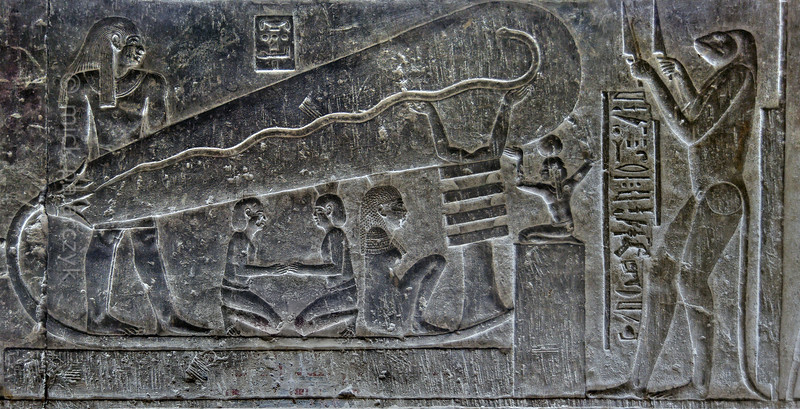
The djed hieroglyph means “stable, enduring”. To say djed is to say: this will not fall. In Memphis, Ptah (the god who creates by speaking) bears the title “noble djed”; at Dendera, the pillar raises its arms to hold up the sky.
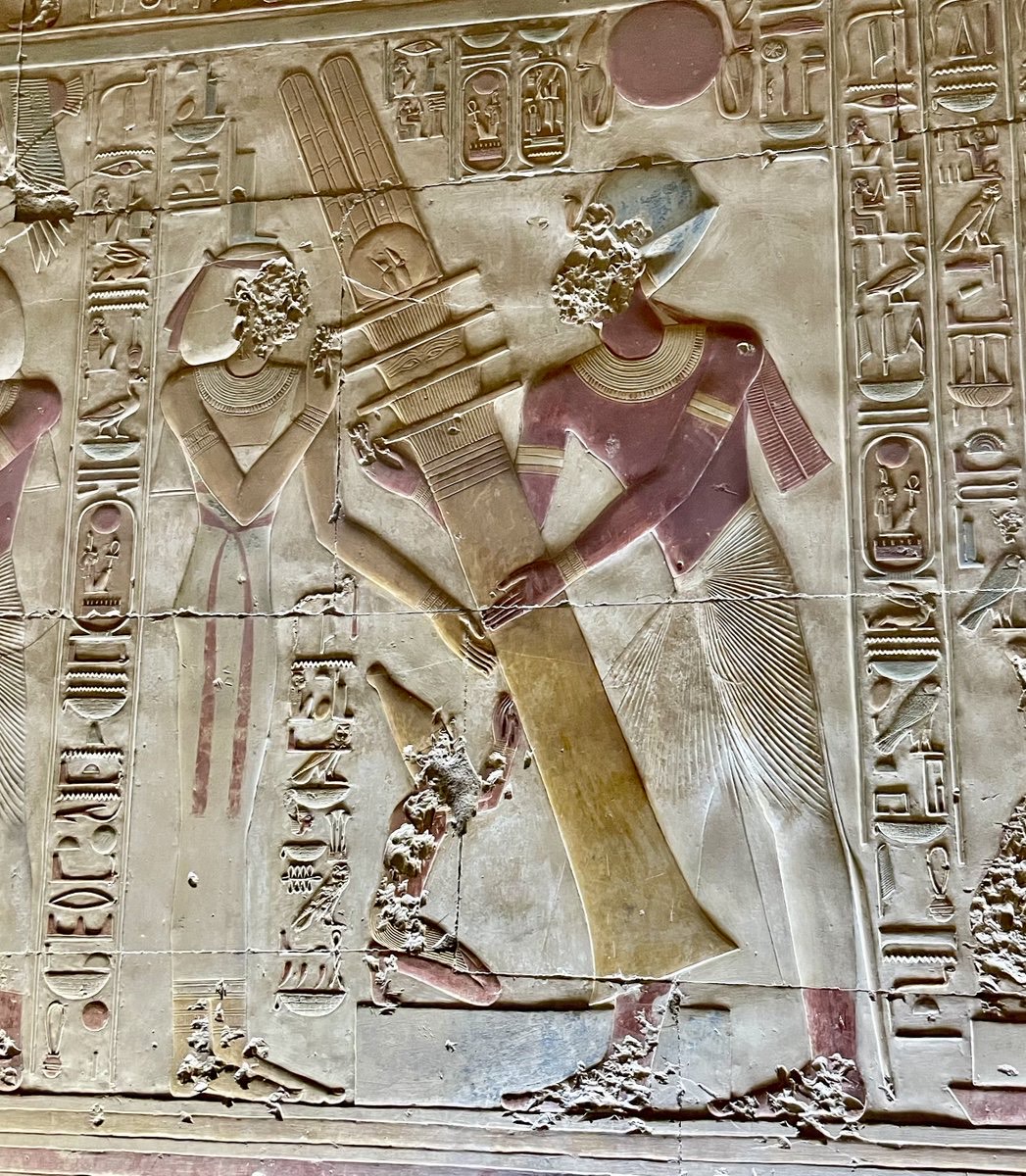
And every year, on the first day of the sowing season, the pharaoh himself, helped by the priests, pulled on ropes to raise a great djed lying on the ground: the victory of order over chaos, staged for all to see. Stability is not a state. It is a gesture you repeat.
Raising the djed
The base.
It all starts with Osiris. Killed, torn apart, gathered again by Isis: his backbone becomes the pillar that keeps him upright in the afterlife. The base of the world’s order.
The shaft.
The djed hieroglyph means “stable, enduring”. It was carved on amulets, slipped between the wrappings of mummies, painted on the floor of coffins.
The four capitals.
The four capitals hold up the sky. At Dendera, the pillar even raises its arms to hold up the rising sun. The djed never stands alone.
Standing.
Every year, at sowing time, the pharaoh pulls the ropes and raises the great fallen djed. Order beats chaos, and everything can begin again.
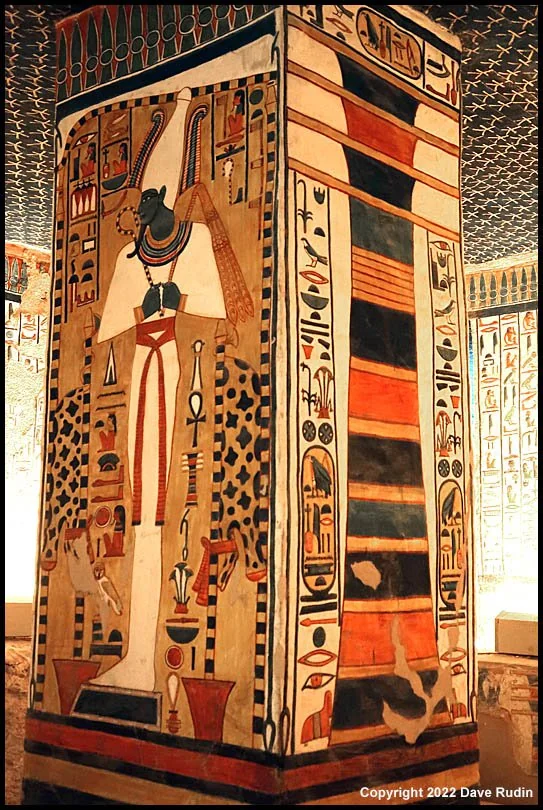
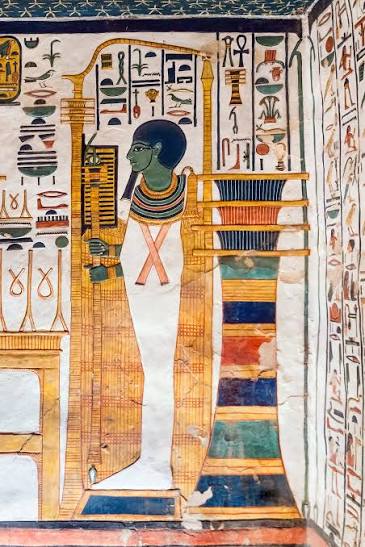
Valley of the Queens: Osiris and his pillar
And what does it have to do with a rota?
An ancient symbol, three very practical promises.
A practice rota is a building. Who stays on Saturday? Who does nights back to back? A badly placed holiday, a forgotten swap, and it all wobbles on one person’s shoulders. We built Djed so the building stands without depending on whoever carries it. The same rite, every month, in 7.7 seconds.
What’s fixed doesn’t break
Hard rules and closures: 0 hard constraints broken by the engine. The base is not up for debate.
Standing every month
Egypt raised the djed once a year. You do it with one click a month, and the rota stands again, on-call included.
Four capitals, a fair load
The fairness index measures what each person carries: days, weekends, on-call, nights. Nobody holds up the sky alone.
Put your rota back on its feet.
30 minutes on your real rota, in English or French, and you leave with a month that stands.